Lensky's Challenge to Onegin
Eugene OneginLensky's Challenge to Onegin is the act that converts a quarrel between friends into a duel with lethal consequences. Lensky issues his challenge in courteous language; Onegin accepts before reflection can restrain him, then becomes dissatisfied with himself even as the encounter moves toward a pre-dawn meeting at the windmill.
The Challenge and Its Acceptance
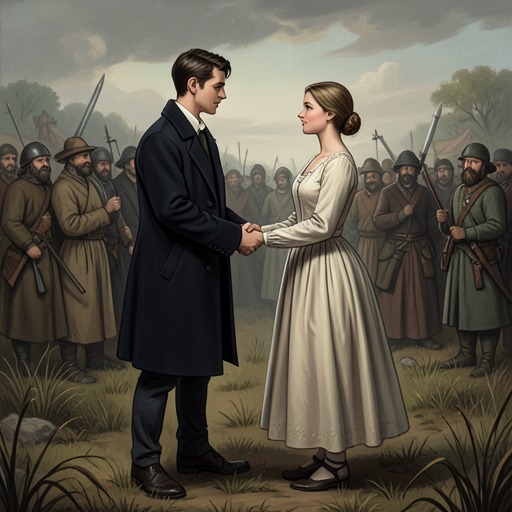
The poem first presents the challenge with bitter irony: Lensky’s invitation is described as a “cheery, generous” cartel, or challenge to a fight. Its tone is courteous, but its purpose is deadly. Lensky formally invites his comrade to combat, making the breach between them subject to the conventions of a duel rather than ordinary reconciliation.
Onegin responds by first impulse. He turns and replies as he thinks the occasion requires, curtly announcing his readiness for the fray. The speed and brevity of his answer matter: he accepts before the narrative records any weighing of consequences. The challenge is thus not simply Lensky’s act; Onegin’s immediate answer makes the duel possible.
Conscience and the Failed Retreat
After the exchange, the poem gives Onegin a moment of inward judgment. Having considered the matter in his conscience, he is dissatisfied with himself. This recognition sets his private misgivings against the outward momentum of the duel: he can see reason for disapproval, yet the decision has not been undone.
A possible escape is then raised through subterfuge—an attempt to turn away from the pistol’s danger. But the possibility does not hold. The next decisive statement removes doubt: Onegin must ride to the windmill the following day before daybreak. The sequence makes the narrowing of choice visible: impulsive acceptance is followed by regret, a contemplated evasion, and finally a fixed appointment.
Lensky’s Anger and the Fatal Appointment
Lensky waits at home for an answer, impatient and boiling with wrath. The delay intensifies the conflict rather than cooling it; he reads the situation from within his anger and remains poised for the response that will settle the matter. The image of him waiting at home contrasts with the approaching ride to the windmill, where the quarrel will leave the domestic sphere for a formal armed encounter.
The challenge’s force lies in this contrast between courteous form and emotional consequence. The invitation is phrased with civility, but the accepted duel binds both men to a confrontation neither later passage presents as a calm or freely renewed decision. Onegin’s conscience registers dissatisfaction; Lensky’s impatience gives the waiting its heat; and the dawn appointment makes the danger concrete. What begins as language between comrades becomes a scheduled meeting with pistols, preparing the fatal outcome of their friendship.